Outsourcing Implementation Planning: What It Actually Takes to Go Live Smoothly
Most of the anxiety around outsourcing has nothing to do with the work itself — it’s about the handoff. Who owns what during the transition? What happens if something breaks in week one? Will customers notice? A well-run implementation plan answers those questions before day one, not after. Here’s what a real transition plan looks like, and why the planning phase is often the difference between an outsourcing engagement that pays off and one that creates more problems than it solves.
TABLE OF CONTENTS
ToggleShare This Article:
Implementation Planning Basics
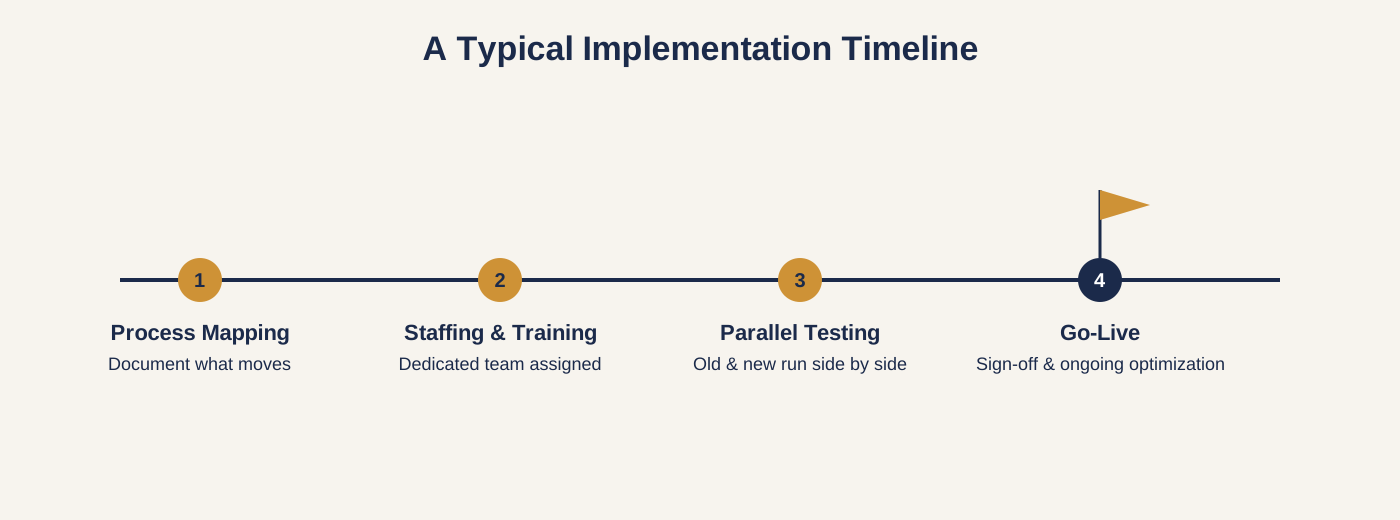
At its core, implementation planning is just project management applied to a handoff: documenting the current state of a process, defining what “done right” looks like once it’s outsourced, and building a sequenced plan to get from one to the other. A good plan covers four things at minimum: a process map of exactly what’s being transferred, a staffing and training plan for the team taking it on, a realistic timeline with milestones, and a method for testing the new setup before it fully replaces the old one. Skip any of these and you’re not implementing a plan — you’re hoping for the best.
When to Engage Implementation Planning
The right time to start planning is before you sign anything, not after. If a prospective BPO partner can’t describe how they’d handle your first 30, 60, and 90 days before the contract is finalized, that’s a signal to keep asking questions. Implementation planning matters most when the work being transferred is customer-facing, time-sensitive, or tied to systems your team can’t easily hand over informally — think customer support queues, order processing, or anything with a hard daily deadline. The more exposure a process has to your customers or your compliance obligations, the more a formal transition plan earns its keep.
Benefits of a Structured Transition
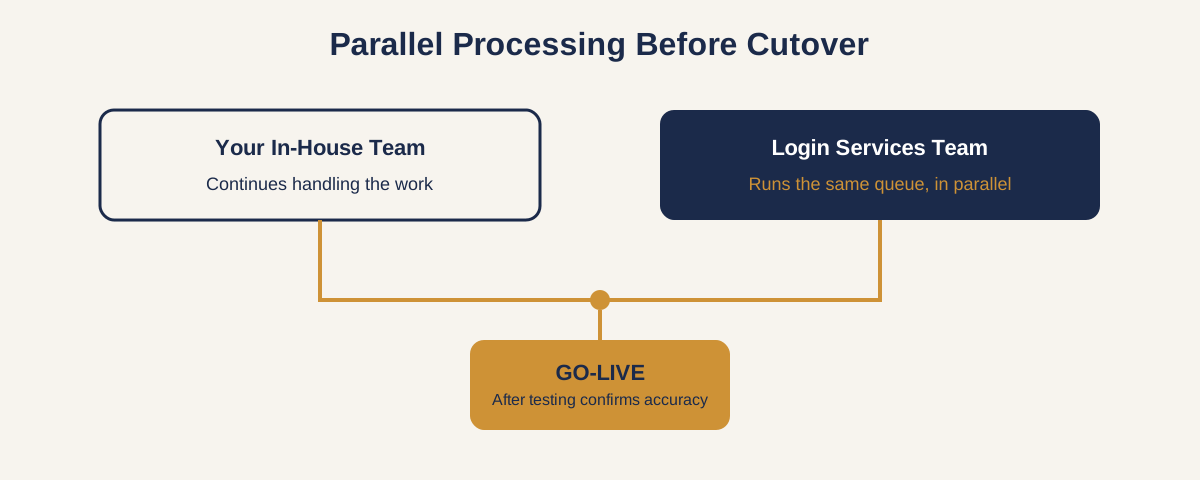
Companies that treat implementation as a real planning exercise, rather than an afterthought, see the difference quickly. Milestones keep both sides honest about progress instead of relying on vague check-ins. Parallel processing — running the old and new workflows side by side before cutover — catches gaps while they’re still cheap to fix. And a named project manager on the BPO side means there’s one person accountable for the transition succeeding, rather than a handoff that’s everyone’s job and no one’s responsibility. The result is usually a go-live date that customers never notice happened at all, which is the actual goal.
Typical Implementation & Transition Services
A full-service BPO’s implementation work generally includes: a business case and process-mapping session to document what’s moving; a staffing plan that identifies, trains, and (often) lets you approve the specific team assigned to your account; systems access and testing, including secure data-exchange setup if you’d rather not hand over full system credentials; a parallel-run period where both teams work the same queue before cutover; a defined go-live date with a sign-off meeting a few days after; and ongoing optimization once the dust settles, since the first version of any process rarely stays the final one.
Choosing a BPO for Implementation Support
Not every provider treats this phase with the same rigor, so it’s worth asking a few direct questions before you sign: Who is my dedicated project manager, and when do I meet them? What does the first 30/60/90 days look like in writing? How do you handle parallel testing, and for how long? What happens if a milestone slips? A provider with a real answer to each of these — not a generic sales pitch — is one that’s done this enough times to have a repeatable process, which is exactly what you want handling your transition.
Speak With an Implementation Expert
At Login Services, every engagement starts with a dedicated project manager who builds your transition plan, tests before go-live, and keeps you updated at every milestone — so the switch is smooth for you and invisible to your customers. If you’re evaluating outsourcing and want to know what your first 90 days would actually look like, we’re happy to walk through it.
Share This Article: